Something to Say to God: Francis Grimké and the Keeping of a Prayer Journal
“Each day make a list of the things to be prayed for,” wrote Francis Grimké, “so that when we enter our closet we shall have something to say to God.” A post on the old pastor of Fifteenth Street, a rebuilt prayer planner, and written intercession inside the daily office.

Most of the intercession I attempted before I kept a prayer journal followed a pattern that I suspect is common. A friend would share a hard thing and I would promise to pray, and, for a day or two, I did. Then the request sank beneath the surface of the week, and the next time I saw my friend I remembered the promise with a small jolt of shame. Multiply that across parents, colleagues, students, a congregation, and the news, and my prayer life amounted to a scatter of good intentions (often) punctuated by guilt. I began to notice that the difficulty was one of form. Free intercession, left to itself, risks collapsing into the same petitions repeated in a slightly different order. The fixed prayers of the church, which I love, cannot know the names of the particular people God has placed in my path this particular autumn.
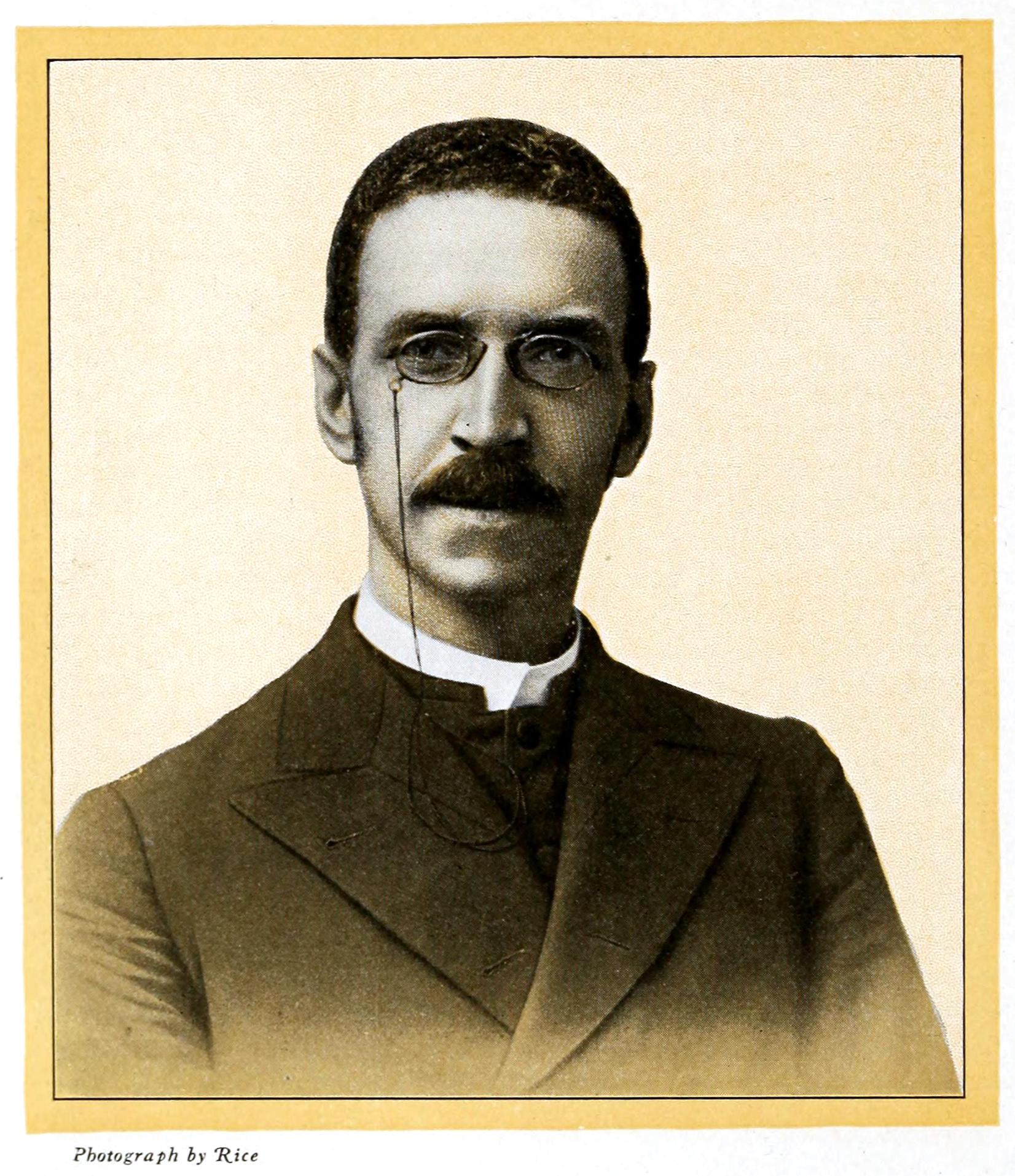
Francis Grimké, for half a century the pastor of the Fifteenth Street Presbyterian Church in Washington, described what prayer is in a way I have never seen bettered. Studying the psalms, he wrote, teaches us “what prayer is. It is talking to God; telling him all about ourselves, our cares, our anxieties, our troubles, vexations, disappointments, in a word, unbosoming ourselves to him as we would to a confidential friend” (3). A confidential friend deserves better than a scatter of good intentions. This post describes the practice that has been teaching me, slowly, to bring the actual lives of the people I love before that Friend. Grimké, whose notebooks I have been reading this summer, stands behind the whole thing as its warrant and its encouragement.
A Life That Ended in Notebooks
Grimké was born on November 4, 1850, outside Charleston, South Carolina. His mother, Nancy Weston, was enslaved by his father, Henry Grimké, a white planter and lawyer. Henry died when Francis was a small child, directing that Nancy and her sons be treated as members of the family, and for some years they lived in Charleston as though free. The arrangement did not hold. In 1860, his white half-brother Montague claimed the boys as slaves, and Francis spent part of the Civil War as a valet to Confederate officers, at one point nearly dying in the Charleston workhouse after Montague had him seized. After the war, he and his brother Archibald made their way north to Lincoln University, where their aunts, the famous abolitionists Sarah and Angelina Grimké, learned of their existence. The aunts acknowledged the kinship publicly and helped pay for the brothers’ education. Francis graduated as valedictorian of Lincoln’s class of 1870. A brief attempt at law at Howard gave way to Princeton Theological Seminary, from which he graduated in 1878.
The rest of the biography can be told quickly because it happened almost entirely in one place. Fifteenth Street Presbyterian Church called him in 1878, and he served it, apart from a brief interval in Florida, until his retirement in 1928, remaining pastor emeritus until his death in 1937. Fifteenth Street held much of Black Washington’s leadership in its pews, and his voice carried well beyond it. He helped found the American Negro Academy in 1897 and was among the founders of the NAACP. He declined the presidency of Howard because he could not leave the congregation. Within the northern Presbyterian church he was an unrelenting opponent of segregation, most visibly in his fight during 1904 and 1905 against reunion with the Cumberland Presbyterians, a merger that went through in 1906 on terms permitting racially separated presbyteries. He understood his public witness as an extension of his pastoral office, and he understood his pastoral office as a call to holiness of life.
The part of the story that concerns us begins in 1914, when his wife, the writer and educator Charlotte Forten Grimké, died. Carter G. Woodson, who edited Grimké’s collected works, tells us that the pastor “became decidedly reflective” in his grief, and more so as age withdrew him from the pulpit. He began recording his thoughts in notebooks, which he titled “Stray Thoughts and Meditations.” The notebooks run from 1914 to 1934 and fill the third volume of the Works. Woodson insists that they “must not be taken as a diary,” and he is right. They are meditations, petitions, memoranda of gratitude, and annual reckonings before God. They are, in other words, a prayer journal, kept by an old man who had spent a lifetime learning what to say to his confidential Friend.
The Warrant
Written devotion is old practice in the Reformed tradition. The Puritans made the spiritual diary nearly a duty, and John Beadle’s The Journal or Diary of a Thankful Christian (1656) supplied the theory, commending a written account book of God’s dealings with the soul. Jonathan Edwards drafted resolutions and reviewed them. Sarah Osborn of Newport filled thousands of pages with prayer. What surprised me in Grimké was finding the practical core of the whole tradition compressed into a single sentence. “Each day make a list of the things to be prayed for, and the persons to be remembered in prayer, so that when we enter our closet and shut the door, we shall have something to say to God, some reason for coming into his presence, for seeking communion with him” (222).
The sentence seems to assume that intercession is prepared, and that the preparation is written down in advance. Grimké describes a list composed before the praying, made so that the closet does not find us empty-handed. The list is an act of love toward the people on it. It is also an act of humility about ourselves, an admission that memory is a poor steward of other people’s suffering. Every method I describe below is an elaboration of that one sentence.
The Method
The physical journal I use began as a product of American evangelicalism. I have an earlier version of Lois Krogh’s Pour Out Your Heart Prayer Journal (Crossway, 2022), which is organized into four sections: Daily Gospel Truth, Promises, Prayers, and Provisions, and it is built to last for years of use. Its central mechanism, which I have kept intact and which deserves full credit, is the sticky note. Perishable requests, a medical appointment, a job interview, an expected birth, an approaching vote, go onto small notes posted on the page for the relevant person or subject. Durable petitions get written in ink on the lined pages on the opposing pages. The notes come and go and the ink accumulates. I should be honest that the journal’s idiom is quite far from my own ecclesial world. It is marketed explicitly to women, and its scriptures are from the ESV—a translation of scripture I do not recommend. Its imagined setting is the devotional quiet time of the evangelical subculture from which it comes. I have, however, rebuilt it for use inside the liturgical life of the PC(USA), and the rebuilding is most of what follows.
The first modification is a weekly rotation. Each day of the week owns one spread of the Prayers section. Monday belongs to my parents. Tuesday belongs to extended family (as well as for prayers for the presence of the Holy Spirit, my revision of the “prayers for unbelievers” section). Wednesday belongs to friends, Thursday to colleagues (as well as what I am calling “social justice ministry and action in the world,” replacing the “prayers for the advancement of Christ’s kingdom” section), Friday to my partner, Saturday to leaders, elected officials, and the natural world, Sunday to my students (and the “household of faith,” i.e., my church). A section of prayers for myself belongs to no fixed day and gets prayed daily, after prayers for others. The rotation suggests the whole assignment on any given morning is simply one spread. I read the scripture verses copied onto that spread, pray them over the people named there, pray each sticky note as written, pray whatever long-term petitions stand in ink, and close with the Lord’s Prayer. Ten minutes is the aim, a floor for attention and, obviously, never a ceiling.
| Day | Focus |
|---|---|
| Monday | Parents |
| Tuesday | Extended family · Presence of the Holy Spirit |
| Wednesday | Friends |
| Thursday | Colleagues · Social justice ministry and action in the world |
| Friday | My partner |
| Saturday | Leaders and elected officials; the natural world |
| Sunday | My students · Household of faith |
The second modification is a weekly review, fifteen minutes, sometimes more, on Sunday evening. I walk through every spread and pull any note whose situation has resolved. For each pulled note I turn to Provisions and record one dated sentence, what was asked and what came of it. Prayers answered differently than asked belong there too, because the record is of God’s dealing in whatever shape it took. I add new notes gathered from the week’s conversations and correspondence, and I post a note for anything hard coming in the week ahead. Then comes the one piece of composition the system permits. Each Sunday, I draft or refine a single long-term prayer for a single sub-section, working from a page of prompts I wrote for myself. The prompts ask questions like these:
- What do I ask God to preserve in my parents as they age, and what do I ask God to give them that they have never had?
- Which friendships do I want to still exist in twenty years, and what would they need?
Two or three lines are sufficient. The lined pages fill by accretion, and within two months every section has its petition.
A sample Monday: A cup of coffee with the Daily Gospel Truth page, one pericope read slowly, followed by a reading of the PC(USA)’s Brief Statement of Faith.
He has rescued us from the power of darkness and transferred us into the kingdom of his beloved Son, in whom we have redemption, the forgiveness of sins. He is the image of the invisible God, the firstborn of all creation, for in him all things in heaven and on earth were created, things visible and invisible, whether thrones or dominions or rulers or powers—all things have been created through him and for him. He himself is before all things, and in him all things hold together. He is the head of the body, the church; he is the beginning, the firstborn from the dead, so that he might come to have first place in everything. For in him all the fullness of God was pleased to dwell, and through him God was pleased to reconcile to himself all things, whether on earth or in heaven, by making peace through the blood of his cross. And you who were once estranged and hostile in mind, doing evil deeds, he has now reconciled in his fleshly body through death, so as to present you holy and blameless and irreproachable before him, provided that you continue securely established and steadfast in the faith, without shifting from the hope promised by the gospel that you heard, which has been proclaimed to every creature under heaven. – Col. 1:13–23a (NRSVue).
In life and in death we belong to God.
Through the grace of our Lord Jesus Christ,
the love of God,
and the communion of the Holy Spirit,
we trust in the one triune God, the Holy One of Israel,
whom alone we worship and serve.
We trust in Jesus Christ,
Fully human, fully God.
Jesus proclaimed the reign of God:
preaching good news to the poor
and release to the captives,
teaching by word and deed
and blessing the children,
healing the sick
and binding up the brokenhearted,
eating with outcasts,
forgiving sinners,
and calling all to repent and believe the gospel.
Unjustly condemned for blasphemy and sedition,
Jesus was crucified,
suffering the depths of human pain
and giving his life for the sins of the world.
God raised this Jesus from the dead,
vindicating his sinless life,
breaking the power of sin and evil,
delivering us from death to life eternal.
We trust in God,
whom Jesus called Abba, Father.
In sovereign love God created the world good
and makes everyone equally in God’s image
male and female, of every race and people,
to live as one community.
But we rebel against God; we hide from our Creator.
Ignoring God’s commandments,
we violate the image of God in others and ourselves,
accept lies as truth,
exploit neighbor and nature,
and threaten death to the planet entrusted to our care.
We deserve God’s condemnation.
Yet God acts with justice and mercy to redeem creation.
In everlasting love,
the God of Abraham and Sarah chose a covenant people
to bless all families of the earth.
Hearing their cry,
God delivered the children of Israel
from the house of bondage.
Loving us still,
God makes us heirs with Christ of the covenant.
Like a mother who will not forsake her nursing child,
like a father who runs to welcome the prodigal home,
God is faithful still.
We trust in God the Holy Spirit,
everywhere the giver and renewer of life.
The Spirit justifies us by grace through faith,
sets us free to accept ourselves and to love God and neighbor,
and binds us together with all believers
in the one body of Christ, the Church.
The same Spirit
who inspired the prophets and apostles
rules our faith and life in Christ through Scripture,
engages us through the Word proclaimed,
claims us in the waters of baptism,
feeds us with the bread of life and the cup of salvation,
and calls women and men to all ministries of the church.
In a broken and fearful world
the Spirit gives us courage
to pray without ceasing,
to witness among all peoples to Christ as Lord and Savior,
to unmask idolatries in Church and culture,
to hear the voices of peoples long silenced,
and to work with others for justice, freedom, and peace.
In gratitude to God, empowered by the Spirit,
we strive to serve Christ in our daily tasks
and to live holy and joyful lives,
even as we watch for God’s new heaven and new earth,
praying, “Come, Lord Jesus!”
With believers in every time and place,
we rejoice that nothing in life or in death
can separate us from the love of God in Christ Jesus our Lord.
Glory be to the Father, and to the Son, and to the Holy Spirit. Amen. – PC(USA) Brief Statement of Faith
The Parents spread holds two notes, a cardiology follow-up for my father on the eighteenth and my mother’s anxiety about a long drive in October. The long-term line beneath them reads, “That my parents would know in their bodies, as they age, that their worth was never their usefulness.” I pray the copied verse, Isaiah 46:4, “even to your old age I am he,” over both of them, then pray each note plainly, then give one sentence of thanks that they are still here to be prayed for. Eight minutes. The system remembered the appointment so that I did not have to, and the appointment got prayed for five mornings before it happened, which is five more than my unaided memory had ever managed.
A missed day is simply missed, with no doubling up, since a rule that generates guilt has stopped serving the prayer. And composition never happens during prayer itself. If a section stands blank on its appointed morning, it stays blank until Sunday. The mornings are for praying what is already written.
Inside the Daily Office
None of this floats free of the church’s liturgy. My daily prayer follows the Book of Common Worship: Daily Prayer of the PC(USA), and my scripture follows the expanded daily readings keyed to the Revised Common Lectionary. Morning Prayer in the BCW moves from opening sentences through psalmody and the readings to a place appointed for thanksgivings and intercessions, and that appointed place is exactly where the journal sits. The office carries me to the moment of intercession. The journal tells me what to say when I arrive. Since the rule already closes with the Lord’s Prayer, the seam between the two is invisible, and the office resumes on the far side of it.
The two systems turn out to share a form. The lectionary assigns portions, and part of its discipline is receiving the assigned portion without reading ahead. The rotation assigns spreads, and its discipline is the same. One spread per day is the entire assignment. In both cases the structure reflects what my will cannot, and in both cases the daily portion is small enough to be received with full attention. Grimké knew the principle from the other direction. “If the spiritual life is not fed, and fed daily, it will be sure to grow less and less, and finally entirely die out” (173). He commended the morning hour for the feeding. “It is a great thing to begin the day with God in our thoughts,” he wrote, “in the sweet consciousness that he is with us and is guiding us. It wonderfully prepares us for whatever burdens we have to bear and whatever problems we may have to meet” (214).
One feature of Krogh’s design I have kept with full theological conviction is the order of operations. The journal opens with Daily Gospel Truth, and the rule requires that intercession begin there, with one gospel verse read slowly. The sequence preaches. Petition is response. God has already opened communication with us in Jesus Christ, and everything we ask is asked inside that prior address. Karl Barth taught me to think this way about prayer, and I was glad to find the instinct built into the furniture of an evangelical prayer planner, whatever its authors would make of my reading of it.
Provisions
The section that converts the discipline into an encouragement is Provisions. One dated sentence per answered request seems thin for the first month. After a year it becomes a document unlike anything else I own, a ledger of providence in my own handwriting, dated and specific, proof against the vague amnesia that makes gratitude abstract. The old Reformed word for this is Ebenezer, the stone set up so that a forgetful people would have to walk past the evidence. “Hitherto hath the LORD helped us.”
Grimké’s notebooks show what such a ledger looks like when it is kept to the end of a life. On his seventieth birthday he sat down and wrote out the accounting. “These seventy years have had many, many things crowded into them,” he recorded, and then reached for the psalm, “Goodness and mercy have followed me all these years. I have, oh, so many, many things to be thankful for. The way God has led me has been most wonderful!” (94). On the first day of 1930, at seventy-nine, he opened the notebook again. “God in his kind providence has spared me to see it,” he wrote, and counted his provisions, the Word he could still read, the communion with God he could still keep, and then turned the entry from record into offering. “On this, the first day of the year, out of a sense of gratitude, I do here and now reconsecrate myself to his service, and to the service of my fellow men” (383).
That is where the practice leads. The sticky notes do their perishable work and die their natural deaths into Provisions. The inked petitions do their durable work across years, and slowly the journal becomes what Grimké’s notebooks became, a written history of a friendship, kept by the weaker friend, recording the faithfulness of the stronger one. I keep mine so that when I enter my closet and shut the door, I will have something to say to God. I commend the practice, and the old pastor of Fifteenth Street, to you.
Parenthetical page numbers refer to Francis J. Grimké, “Stray Thoughts and Meditations,” in The Works of Francis J. Grimké, ed. Carter G. Woodson, vol. 3 (Washington, DC: Associated Publishers, 1942). The prayer journal discussed is Lois Krogh, Pour Out Your Heart Prayer Journal: A Planner for a Life of Prayer (Wheaton, IL: Crossway, 2022).


