Sharing the Burden
Presbyterian Polity as a Gift of the Spirit
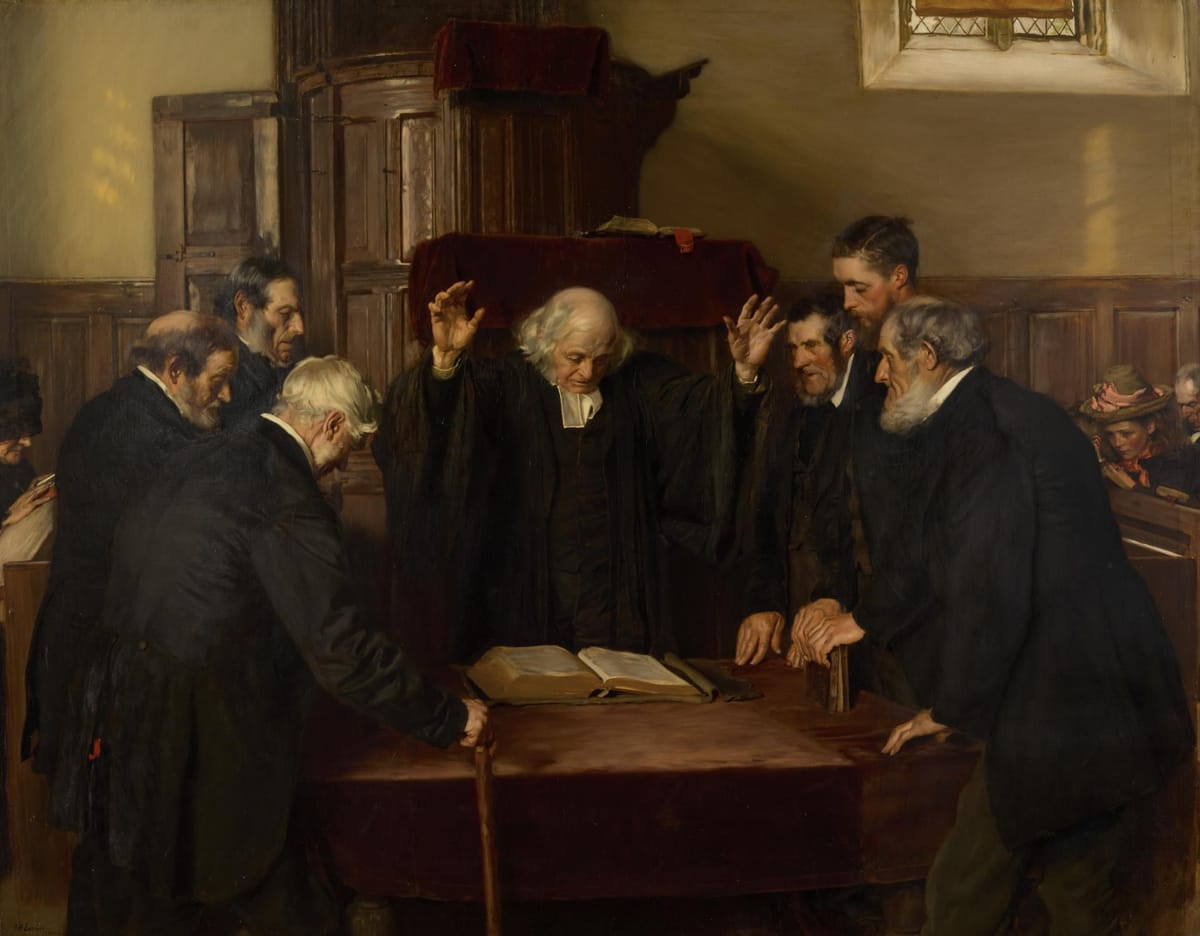
So the Lord said to Moses, ‘Gather for me seventy of the elders of Israel, whom you know to be the elders of the people and officers over them; bring them to the tent of meeting and have them take their place there with you. I will come down and speak with you there, and I will take some of the spirit that is on you and put it on them, and they shall bear the burden of the people along with you so that you will not bear it all by yourself.’ – Numbers 11:16–17 (NRSVue)
Presbyterianism is distinctive because of the conceptual resources it brings to the wider church. One of these resources concerns our understanding of polity. We hold, through the Spirit’s guidance and the witness of Scripture, that God has given the church a pattern for leadership. Christian leadership follows a spiritual logic that informs both authority and service. In Presbyterian life, this logic centers on wisdom, discernment, and the shared bearing of responsibilities across the ordered ministries of deacons and ruling elders, and ministers of Word and Sacrament.
The ordered ministries make the church’s commitments to mercy and justice visible within the life of the Kingdom. Ministers of Word and Sacrament support this work by teaching and equipping the diaconate and ruling elders to carry out their vocation as disciples of Jesus Christ.
One important implication of this vision, I think, is that Presbyterian leadership is never exercised in isolation. Authority is exercised in councils where teaching and ruling elders deliberate together, test their judgments against Scripture and the confessions, and listen for the Spirit’s leading through the voices of the whole people of God. Recalling the heuristic of “spiritual logic,” we do this for reasons that include but transcend procedural fairness. Shared discernment becomes a spiritual discipline that trains leaders to resist domination, to seek the good of the body rather than individual preference, and to receive correction as a mark of faithfulness. We should dwell on these three hallmarks of Reformed polity more. We learn to resist domination. We learn to seek the common good (and deny ourselves), we learn to be teachable. These are no small accomplishments. This is not easy work.
This polity also reflects a particular understanding of calling. Deacons, ruling elders, and ministers of Word and Sacrament respond to the same Lord, yet their vocations are differentiated for the sake of the church’s upbuilding. Deacons focus the community’s attention on service, compassion, and material care. Ruling elders attend to governance, spiritual oversight, and the cultivation of a common life ordered toward Christ. Ministers of Word and Sacrament attend to preaching, teaching, and the administration of the sacraments so that the whole body may be nourished and sent. Each ordered ministry depends on the others, and when they function well together, the congregation glimpses a form of power that is accountable, shared, and (most importantly) oriented toward reconciliation:
To be reconciled to God is to be sent into the world as his reconciling community. This community, the church universal, is entrusted with God’s message of reconciliation and shares his labor of healing the enmities which separate men from God and from each other. Christ has called the church to this mission and given it the gift of the Holy Spirit. The church maintains continuity with the apostles and with Israel by faithful obedience to his call. – C67, Book of Confessions, 9.31
In a fractured and anxious age, this Presbyterian pattern offers us a way of embodying trust in God’s sovereignty through patient, corporate discernment. It insists that decisions about money, mission, worship, and pastoral care belong within a community that has promised to listen to Christ through Scripture, to one another, and to neighbors who bear Christ’s image. When deacons, elders, and ministers take their vows seriously, the church becomes a school of wisdom in which leadership is measured by attentiveness to the vulnerable, clarity about the gospel, and persistence in prayer.
In the wilderness, the Lord answered Moses’ exhaustion by multiplying Spirit-filled leadership so that the burden of the people would be shared. Presbyterian polity stands in that same stream of divine generosity. When a congregation ordains officers, it is receiving a particular pattern of life together in which the Spirit distributes gifts and teaches the whole body what it means to belong to Christ. We can expect that the Spirit who rested on Moses now rests on the people of God, equipping them to bear one another’s burdens. My prayer is that we, as Presbyterians, would trust this gift. May we inhabit our polity as a form of discipleship, so that in our common life the church bears a credible witness to the mercy, justice, and reconciliation of the One who calls and sends us.


Comments ()