Hoping Against Hope (Romans 4:13–25)
A Homily for the Second Sunday after Pentecost (Year A)
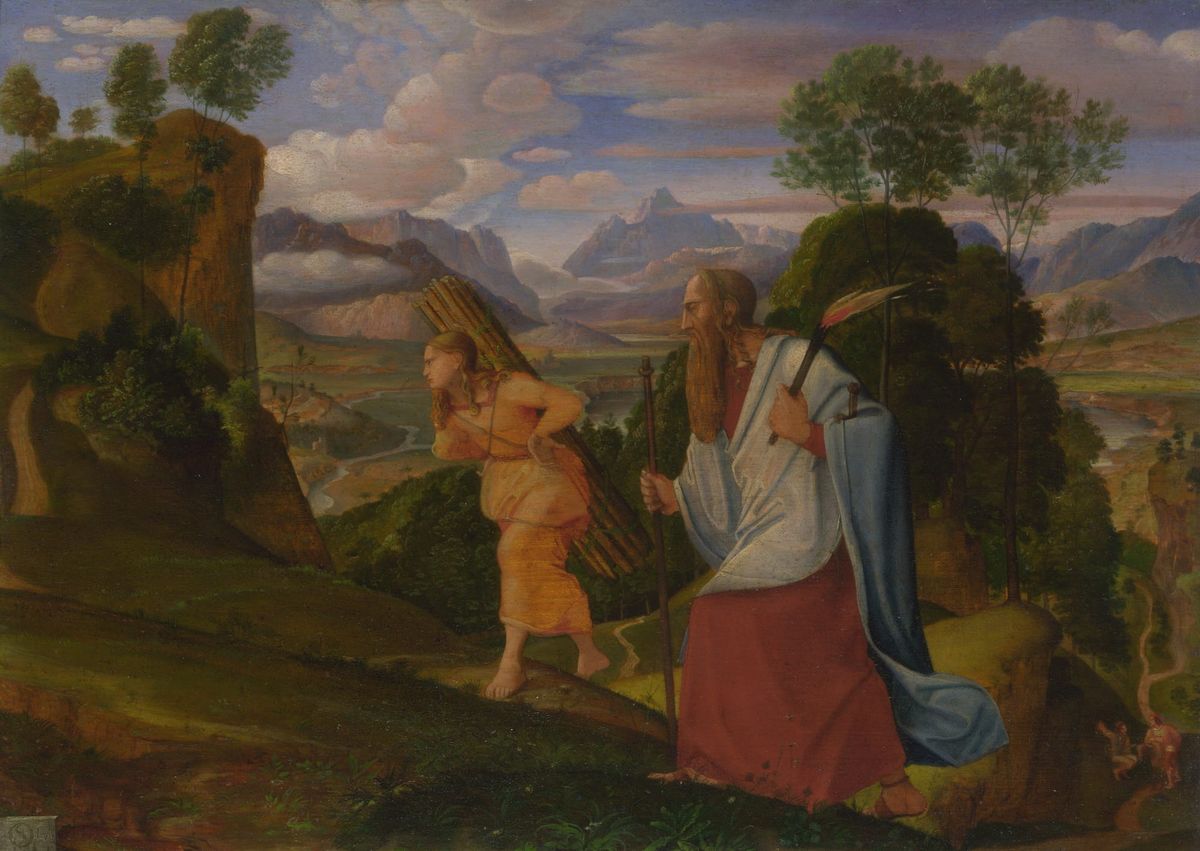
“Hoping Against Hope” is a homily I prepared for the Second Sunday after Pentecost (2026, Year A) and delivered at the 8:00 AM and 9:30 AM services at First Presbyterian Church of Ann Arbor on Sunday, 7 June 2026, at the invitation of the Rev. Melissa Anne Rogers and the Rev. David Prentice-Hyers. Based on Romans 4:13–25, the homily reads Abraham’s faith as trust. Taking righteousness in Paul as God’s saving deliverance rather than a forensic verdict, it finds the content of that deliverance in Isaac, the child whose name means he laughs, and joins the creation of the world, the calling of Abraham, and the raising of Jesus as one act of the God who is at home in the prayer that has lost its words.
The sermon begins at approximately 00:40:52.
God’s Promise Realized through Faith
13 For the promise that he would inherit the world did not come to Abraham or to his descendants through the law but through the righteousness of faith. 14 For if it is the adherents of the law who are to be the heirs, faith is null and the promise is void. 15 For the law brings wrath, but where there is no law, neither is there transgression. 16 For this reason the promise depends on faith, in order that it may rest on grace, so that it may be guaranteed to all his descendants, not only to the adherents of the law but also to those who share the faith of Abraham (who is the father of all of us, 17 as it is written, “I have made you the father of many nations”), in the presence of the God in whom he believed, who gives life to the dead and calls into existence the things that do not exist. 18 Hoping against hope, he believed that he would become “the father of many nations,” according to what was said, “So shall your descendants be.” 19 He did not weaken in faith when he considered his own body, which was already as good as dead (for he was about a hundred years old), and the barrenness of Sarah’s womb. 20 No distrust made him waver concerning the promise of God, but he grew strong in his faith as he gave glory to God, 21 being fully convinced that God was able to do what he had promised. 22 Therefore “it was reckoned to him as righteousness.” 23 Now the words, “it was reckoned to him,” were written not for his sake alone 24 but for ours also. It will be reckoned to us who believe in him who raised Jesus our Lord from the dead, 25 who was handed over for our trespasses and was raised for our justification.
— Romans 4:13–25 (NRSVue)
Friends in Christ, please join me in prayer:
Beckoning God,
you promise long journeys and new names.
Call us out to risk holy adventure
with unusual table companions.
Linger with us
so that we may be faithful disciples,
touching the fringe of your healing
on behalf of all your children. Amen.
A hundred-year-old man fell on his face and laughed at the promise of God. His wife laughed, too. When at last the child of that promise came, they named him Isaac, which is the Hebrew word for he laughs. The Bible has built laughter into the very name of the child. We do not usually picture Abraham this way. We picture him obedient at the binding of his son, faithful at the call to leave his country, ready at any moment to take whatever God gives him. Genesis shows us a man who heard the promise of a son and broke up laughing at the absurdity of it. The God we worship this morning is the God who came to a man like that, and who got from him, somehow, the faith that Paul will spend the fourth chapter of his letter to the Romans trying to describe.
Many of us arrived in this sanctuary carrying tremendous fear. We confessed it together a few minutes ago, and in our own quiet way. We acknowledged that fear has been stifling us, that we have not moved forward in faith. There is no shame in admitting this. There are indeed things in this life that look stronger to us than the promises of God: the diagnosis you just received; the marriage that has been dying for years; the prayer you have been praying so long that you have stopped expecting an answer; the parent who is slipping away from you. Abraham, at the age of a hundred, looking at his dying body and Sarah’s infertility, knew this kind of weight perfectly well. My friends, Abraham was right to laugh.
In his Church Dogmatics, Karl Barth very pointedly asks a rhetorical question: “What is left for man but free [humor]?” That is, humor in real freedom? What Paul wants the church in Rome to see, and I would wager, what he would want us to see this morning, is that God did not need Abraham’s laughter to be anything other than laughter. God did not need Abraham to suppress what he was seeing. God did not require the cheerful refusal of the obvious. God came to a man who saw his situation clearly and made a noise about it. And the God who came to that man is the God we have gathered here to worship.
In Romans, Paul reaches all the way back to Abraham because he is rereading two specific stories in Genesis. The order in which those stories appear matters a great deal.
In the fifteenth chapter of Genesis, God brings Abram outside his tent at night and tells him to count the stars. So shall your descendants be. The chapter then contains the line Paul will quote at the climax of our passage today: and he believed the Lord, and the Lord reckoned it to him as righteousness. There is no covenant of circumcision yet. There is no law. Abram has no son. He has only the word that has come to him in the dark, and he has believed it. That belief is what God counts as righteousness. Years later, in the seventeenth chapter, when Abram is ninety-nine, God appears again. This time, God makes the covenant of circumcision and changes the patriarch’s name from Abram to Abraham, meaning father of many nations. And when God adds that Sarah, who is ninety, will bear a son in her old age, Abraham falls on his face and laughs.
The order is what Paul wants the Romans to notice. The promise comes first, and the law comes after. Whatever it is that makes Abraham right with God is not what makes him a member of any particular community. It is the word that came to him in the night under the stars, and his belief in the One who spoke it.
Paul names God in a particular way at verse seventeen. He calls God the One in whom Abraham believed, the One who gives life to the dead and calls into existence the things that do not exist. The God who spoke to Abraham is the same God who, according to the psalm we heard earlier this morning, spoke, and the heavens came to be. God is the same God who, Paul is about to say, raised Jesus Christ from the dead. The creation of the world and the calling of Abraham and the resurrection of Christ are one act of God, performed by the One who is at home in illness, in couples facing infertility, and in empty tombs. Faith, as Paul understands it, is trust placed in the One who does this kind of thing.
And this tells us something about a word Paul is about to use. At verse twenty-two he says that Abraham’s faith was reckoned to him as righteousness. We are tempted to hear “righteousness” as a verdict, a favorable entry posted in a heavenly ledger over Abraham’s head. But when Scripture calls God righteous, it is not naming a verdict in the first instance. In the Psalms and the prophets, the righteousness of God is God’s saving action, the rescue God works for people who cannot rescue themselves. God’s righteousness is God’s deliverance. So Abraham’s faith was reckoned as righteousness because he trusted the God who delivers, and that trust joined him to the God who was about to act. And in Abraham’s story, that deliverance came with a face and a name. It came as Isaac, the child whose name means he laughs. When Paul says that righteousness was reckoned to Abraham, Isaac is what he means. Righteousness here is God’s saving act, the life God calls out of a body that was as good as dead, and in Abraham’s story that act took flesh as a son. The son God gave is the righteousness God reckoned, and the name God gave that deliverance was laughter.
Look at verse nineteen. Paul writes that Abraham did not weaken in faith when he considered his own body, which was already as good as dead, and Sarah’s infertility. The verb is the one we need to hear. Abraham considered. He looked. He took stock. He did not close his eyes against the situation, but he opened them. The passage describes a man who took the obvious into account and, after taking it into account, believed. This passage teaches us, then, that faith is not really the same thing as optimism. The two can look similar from the outside, but they are very different things underneath. Optimism is a way of seeing the world as more promising than it actually is. Faith is what happens when we see the world as it actually is, including the parts of it that are dying, and trust the God who calls life from the dead. Abraham was honest about death. He was honest about his own body, and about the body of his wife. He saw the situation clearly. He laughed at the promise. And he still believed.
The promise of God does not require you to pretend the situation you are facing is better than it is. It does not require you, in fact, to feel anything in particular about it. The promise comes to you in the places that look as good as dead. The God of Abraham is at home in the diagnosis, in the empty room, in the prayer that has lost its words. There is nothing in you to clean up first: bring your hundred-year-old body; bring whatever in you has long ago stopped expecting good news; bring the prayer you no longer know how to pray. The God who came to Abraham is coming to you, now, in this room, in your seat, in the part of you that has nothing left to say.
A few minutes ago, we confessed that we have allowed ourselves to be stifled by fear. Look now at the God who hears that confession. God came to a man who had already given up. God waited until the body was as good as dead and the womb was barren before keeping God’s promise. From a tomb that had been carefully sealed, God raised Jesus our Lord. He was raised, Paul says, for our justification. After everything this chapter has shown us, we should not shrink that word down to a verdict read out in a courtroom. To be justified by this God is to be delivered by this God. It is to be called out of death into life, the way Isaac was called out of a barren womb and the way Jesus was called out of a sealed tomb. When the child finally came, Sarah laughed a second time. God has made laughter for me, she said, and everyone who hears will laugh with me. The laugh that began at the impossibility of the promise had become the laugh of a woman holding the promise in her arms. The promise will not be made any less impossible than it has always been. The God who comes to keep it is the same God who has always come, with the same word, into the same kind of darkness. Hope against hope in the Lord, for God is enough.
+ In the name of the Father, the Son, and the Holy Spirit. Amen.
Notes
- Consultation on Common Texts, ed., Revised Common Lectionary Prayers (Fortress Press, 2002), 144.
- Barth, CD III/4, 665.
- On righteousness and justification in Paul as God’s liberating, life-giving deliverance rather than a forensic verdict, see Douglas A. Campbell, The Deliverance of God: An Apocalyptic Rereading of Justification in Paul (Grand Rapids, MI: Eerdmans, 2009), esp. 663–709. On Isaac as the concrete content of the righteousness reckoned to Abraham in Genesis 15:6, see further Campbell’s rereading of Romans 4:16b–22 in the same volume, esp. 731–60.